Inventory Management | Inciflo – your Supply Chain Partner

How to Manage Pharmacy Inventory Effectively?
By || Inventory Management | 10 Min Read

Effective pharmacy inventory management is crucial for ensuring that patients receive their medications promptly, minimizing waste, and maintaining the financial health of the pharmacy. An efficient system not only streamlines operations but also enhances patient satisfaction and compliance. Let’s discuss the key aspects of managing pharmacy inventory effectively.

What is a Pharmacy Inventory Management System?

A pharmacy inventory management system is a specialized tool use to oversee and control the storage, stock levels, ordering, and tracking of medications within a pharmacy. It integrates various processes to ensure that the right drugs are available in the correct quantities when needed.

Key functionalities include:

  • Stock Monitoring: Keeping real-time track of medicine stock levels to prevent overstocking or stockouts.
  • Order Automation: Automatically generating purchase orders when a stock reaches predefined thresholds.
  • Expiration Date Tracking: Monitoring expiration dates to ensure medications are used before they become ineffective or unsafe.
  • Regulatory Compliance: Maintaining accurate records to comply with legal and safety standards.

Importance of Effective Pharmacy Inventory Management

Efficient inventory management in pharmacy settings is vital for several reasons:

  • Ensuring Patient Safety: Accurate tracking prevents the dispensing of expired or recalled medications, thereby improving patient outcomes.

  • Financial Health: Proper inventory control reduces carrying costs and minimizes losses from expired or unsellable stock.

  • Regulatory Compliance: Maintaining precise records aids in adhering to healthcare regulations and standards.

  • Operational Efficiency: Streamlined processes free up staff time, allowing them to focus more on patient care.

Consequences of Poor Inventory Management

Neglecting proper inventory management can lead to significant issues:

  • Stockouts: Running out of essential medications can delay treatments and harm patient health. 
  • Overstocking: Excess inventory ties up capital and increases the risk of medications expiring before use.
  • Increased Waste: Poor tracking can result in the disposal of unused or expired medications, leading to financial losses.
  • Regulatory Penalties: Failure to comply with inventory regulations can result in fines and damage the pharmacy’s reputation.

8 Important Features of a Pharmacy Inventory Management System

When selecting an inventory management system, consider the following essential features:

1. Real-Time Inventory Tracking: Provides up-to-date information on stock levels, facilitating timely reordering and reducing the risk of stockouts.

2. Automated Reordering: Automatically generates purchase orders when a stock reaches predetermined levels, ensuring continuous availability of medications.

3. Expiration Date Monitoring: Tracks expiration dates to prioritize the dispensing of older stock and minimize waste.

4. Multi-Store & Multi-Location Support: Managing inventory across multiple warehouse locations, providing a centralized view of stock levels and movements.

5. User-Friendly Interface: Ensures the staff can easily navigate and utilize the system, reducing training time and errors.

6. Comprehensive Reporting & Analytics: Generates detailed reports on inventory trends, helping in making informed purchasing and stocking decisions.

7. Integration with Other Systems: Seamlessly connects with other pharmacy systems, such as point-of-sale and electronic health records, for streamlined operations.

8. Security Measures: Implement robust security protocols to protect sensitive data and ensure compliance with privacy regulations.

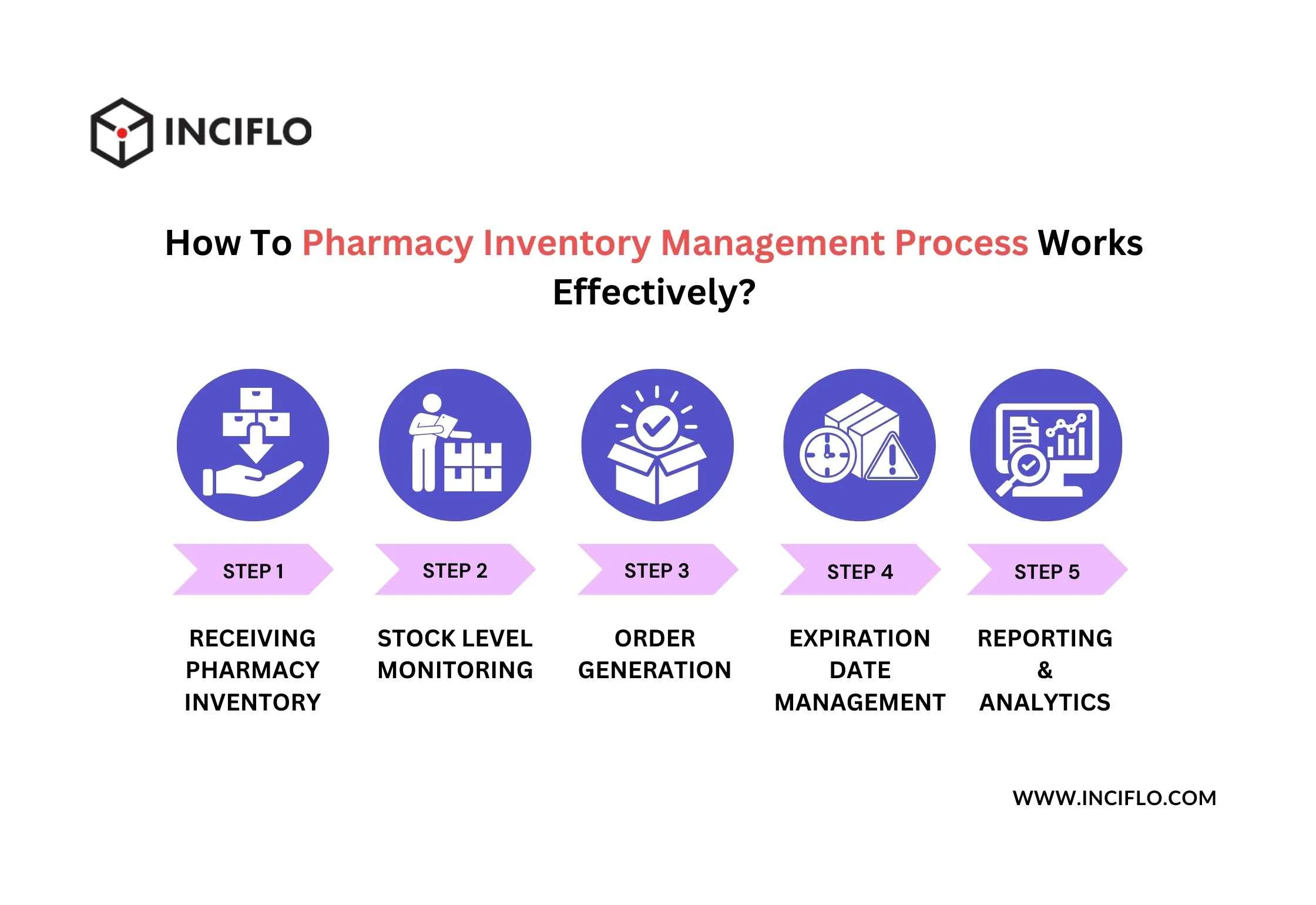
How Pharmacy Inventory Management Systems Work?

Step 1 - Data Input

  • Receiving Inventory: Upon arrival, medication details—such as name, quantity, batch number, and expiration dates—are entered into the system, often via barcode scanning for accuracy.

  • Dispensing Medications: Each dispensation updates inventory levels in real-time, maintaining

Step 2 - Stock Level Monitoring

  • Real-Time Tracking: Continuously monitors current stock, aiding in identifying fast-moving or seldom-used medications.

  • Threshold Alerts: Alerts staff when stock reaches predefined minimum or maximum levels, prompting timely reordering or adjustments.

Step 3 - Order Generation

  • Automated Reordering: Generates purchase orders based on set reorder points and usage data, reducing human error.

  • Supplier Integration: Facilitates direct electronic communication with suppliers, streamlining the ordering process.

Step 4 - Expiration Date Management

  • Tracking Expiry Dates: Records and monitors medication expiration dates, alerting staff to use older stock first.
  • Quarantine and Removal: Flags expired medications for removal, preventing accidental dispensing.

Step 5 - 5. Reporting & Analytics

  • Inventory Reports: Generates detailed reports on stock levels and turnover rates, aiding informed purchasing decisions.

  • Usage Patterns: Analyzes dispensing data to forecast demand and adjust stock accordingly.

  • Regulatory Compliance: Maintains comprehensive records to support compliance with healthcare regulations.

How Does Inciflo Software Help You To Manage Pharmacy Inventory Effectively?

Effective pharmacy inventory management ensure patient safety, minimizing waste, and optimizing operational efficiency. Inciflo – A cloud-based platform offers a comprehensive solution tailored to meet these needs.

Key Features of Inciflo for Pharmacy Inventory:

  • Real-Time Inventory Tracking: Gain instant visibility into stock levels across multiple locations, reducing the risk of stockouts or overstocking.

  • Automated Order Management: Streamline the ordering process with automated workflows, ensuring timely replenishment and reducing manual errors.

  • Expiration Date Monitoring: Track medication expiration dates to prevent dispensing expired products, enhancing patient safety.

  • Mobile Accessibility: Utilize Inciflo’s mobile features for on-the-go inventory management, including in-built scan-based operations for efficient floor management.

  • Comprehensive Reporting & Analytics: Access detailed reports and analytics to make informed decisions and optimize inventory levels.

  • User-Friendly Interface: Designed with simplicity in mind, allowing staff to quickly adapt and utilize the system effectively.

  • Security Measures: Implement robust security protocols to protect sensitive data and ensure compliance with privacy regulations.

Conclusion

Effective pharmacy inventory management is essential for ensuring patient safety, optimizing operational efficiency, and maintaining financial stability. By understanding the importance of inventory control, recognizing the consequences of poor management, and utilizing systems with essential features, pharmacies can significantly improve their operations. Solutions like Inciflo provide comprehensive tools to streamline inventory processes, making them a valuable asset for pharmacies aiming for excellence in service delivery.

Popular Posts